From pulp horror to avant garde poetics, writing that hits hard by Jedediah Smith

Tag: short-stories

  • Starting Today! Kindle Countdown Deal on Esau’s Fables

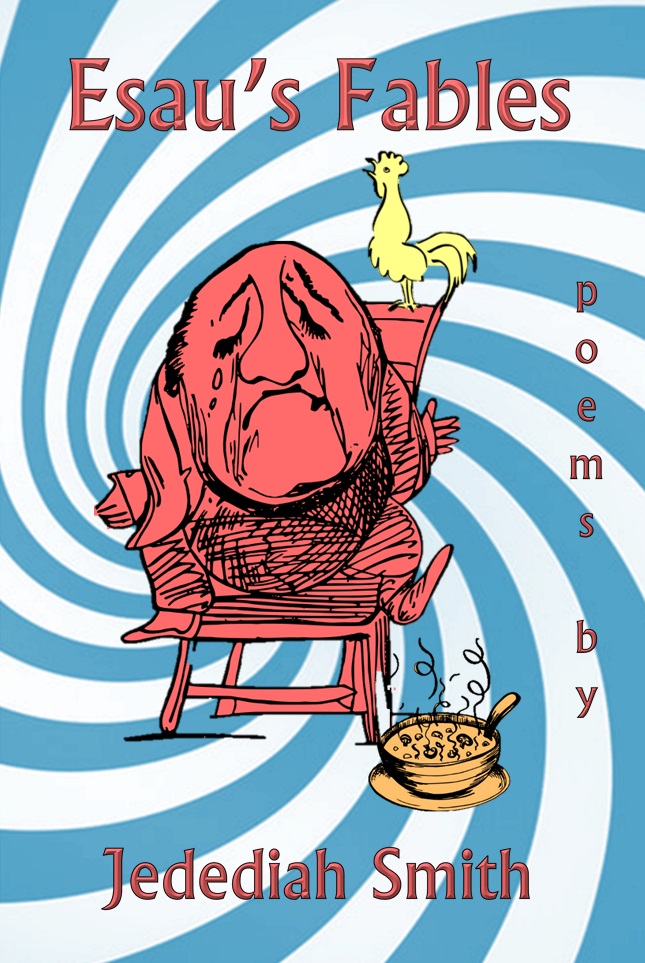
    Esau’s Fables: Prose Poems by Jedediah Smith now available as a Kindle Countdown Deal for $0.99, marked down from its original list price of $6.99, from November 8, 2025 to November 15, 2025.

    Details:
    Publisher‏: ‎ Mount Diablo Books
    Publication date: ‎ January 23, 2025
    Language: ‎ English
    File size: ‎ 2.9 MB
    Print length: ‎ 111 pages

    Working in the tradition of Lewis Carroll, Edward Lear, John Lennon, and Jorge Luis Borges, Jedediah Smith uses surrealism and the absurd to travel easily between Homeric battle fields and Universal monster sets, quantum physics and the Fortean paranormal, archetypal mythology and modern pop culture. As the author puts it himself in “Carnival Road,” the a story about an unpaved lane that is in some inexplicable way hallucinogenic, each parable “creates its own logic that is neither symbol nor allegory but an insistence upon a world of its own making, where images connect in ways that cannot be explained, only experienced.”

    From Esau’s Fables:

    Triton’s Trumpet

    A man’s wife mailed his daughter a box of seashells from the ocean. Cupping them to her ears, she loved to hear the waves crashing and roaring, each in its own pitch, loving best that of a Triton’s Trumpet, bigger than both her hands together, gripped around it intently.

    That night she took it to bed with her. Hours later her father was awakened by her crying. In the girl’s room he sat on the side of her bed and told her, There was a girl crying. Her head ached with sound, and when I cupped her mouth to my ear, I could hear waves. Did you see her? She was here, I’m sure of it.

    The next night, the girl closed Triton’s Trumpet in her dresser drawer. Hours later her father was awakened by the house creaking as it tipped like a ship. In the girl’s room he sat on the side of her bed and said, There was a girl choking. She lay on her back while saltwater sputtered and plumed from her mouth as if she were a beached whale returned too late to the sea. Did you see her? She was floating still on the water’s surface.

    The next night, the girl smashed the Triton’s Trumpet into small fragments. Hours later her father was awakened by the sharp scent of rust on the water. In the girl’s room, he sat on the side of her bed and said, There was a girl being razed. Sharks swirled through the currents of water and air, whipping their heads from side to side in a frenzy of teeth shivering her into fragments. Her eyes met mine while it continued, and there was disbelief. You believe me, don’t you?

    In the morning, he placed all the fragments of his daughter he could find into a box lined with crumpled papers and mailed them back to her mother in the ocean.

  • What is the State of Horror Publishing Today? Part 1: Magazines

    As a writer with a backlog of unpublished stories and novels, this question concerns and worries me. The Big Five are swallowing up smaller imprints; the corporate houses refuse to read unagented manuscripts; agencies are closed to new clients; self-publishing is turning into a revenue stream for everybody but writers–these are just a few topics worth exploring.

    But for today, the topic is horror magazines. Just how many horror fiction periodicals are still out there taking submissions and paying a professional rate? Ever see pictures of magazine stands back in the 30s and 40s? The shelves were so crowded with story-based pulp magazines with those garish, crude, beautiful covers that they looked like a time-lapse slide of cells dividing and subdividing. And that’s exactly what the genres were doing: action divided into western, detective, horror, and war. War divided into sea, land, and air fighting. Air divided into titles focusing on aviators or dogfights or Zeppelins or … you get the picture.

    We are in a reverse age: massive cellular collapse. Because the answer to my question, as of September 2025, is one. Uno. Eins. Not nada but its closest neighbor. Right now, only The Dark fits the criteria: horror fiction, professional, and open. And of the others that claim to still be a going concern:

    Deadlands plans to reopen to submissions in December of this year

    Cosmic Horror Monthly for one week in January of 26

    Nightmare “hopes” for January of 26 as well

    Pseudopod…is weird to mention; the others do print, electronically at least rather than on paper with all its attendant substantiality. Pseudopod posts audio clips of stories. I guess that counts as a periodical of sorts these days. Regardless, they are closed until Aug 26, when they’ll accept submissions for 10 days.

    That’s it. All other titles either shut down or closed to submissions Until Further Notice.

    Not much to nurture a community of writers. Not much to keep potential readers interested and entertained. Not much to provide a path to full book publication. Certainly nothing with which to interest the big media of gaming, comics, television, and movies. They get nearly all of their stories in-house. Hard to believe that once upon a time, a show like Alfred Hitchcock Presents could produce 7 seasons of 35+ episodes each, all based on stories from popular mystery magazines like Ellery Queen and Hitchcock’s own.

    Which begs the question: how does Ellen Datlow in her yearly series The Best Horror of the Year–entitled with all the same humility that went into naming the “World” Series in baseball–find candidates to fill its table of contents? In a word: anthologies. Are they picking up the slack from the near-extinction of story-based magazines? Well, since many of them are closed to the hoi polloi by the aforementioned gatekeepers of corporations and literary agencies, I’d say no. But that’s a subject for my next newsletter.


    Before I sign off, one more question. Am I wrong? I’d love to be. Please comment if you know of any mags I have missed that fit the criteria: horror fiction, professional rates, open to submissions.

    Speak freely,

    Jed

    Cross-posted from:

  • Tuesday Citation: They Do Not Always Remember by William S. Burroughs

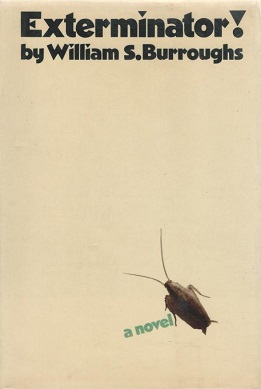
    First published in Esquire, May 1, 1966, this routine (Burrough’s term for his writing jags) was later collected in Exterminator!

    Here is Burroughs talking about the story in relation to his creative process in a lecture at the Naropa Institute (Jack Kerouac School of Disembodied Poetics):

    Now I get about forty percent of my sets an[d] characters from dreams. Sometimes, just a phrase, a voice, a glimpse, and sometimes I will get a whole story or chapter. All I have to do is sit down and transcribe the dream. An example is a story in Exterminator! called “They Do Not Always Remember” And, sometimes in dreams I find a book or a magazine and read a story. So perhaps writers don’t write, perhaps they just read and transcribe.

    Now what are dreams made of? – Much the same material as a novel – pieces of old movies, newspapers, magazines, novels, sensory in-put. The line between subjective and objective experience is purely arbitrary. No objective reality could be experienced without somebody there to experience it subjectively, and no subjective experience could exist without something to experience.

    THEY DO NOT ALWAYS REMEMBER

    It was in Monterrey Mexico … a square a fountain a café. I had stopped
    by the fountain to make an entry in my notebook: “dry fountain empty
    square silver paper in the wind frayed sounds of a distant city.” “What
    have you written there?” I looked up. A man was standing in front of
    me barring the way. He was corpulent but hard-looking with a scarred
    red face and pale grey eyes. He held out his hand as if presenting a
    badge but the hand was empty. In the same movement he took the
    notebook out of my hands. “You have no right to do that. What I write
    in a notebook is my business. Besides I don’t believe you are a police
    officer.” Several yards away I saw a uniformed policeman thumbs
    hooked in his belt. “Let’s see what he was to say about this.”

    We walked over to the policeman. The man who had stopped me spoke
    rapidly in Spanish and handed him the notebook. The policeman leafed
    through it. I was about to renew my prostests but the policeman’s
    manner was calm and reassuring. He handed the notebook back to me
    said something to the other man who went back and stood by the
    fountain.

    “You have time for a coffee señor?” the policeman asked. “I will tell
    you a story. Years ago in this city there were two policemen who were
    friends and shared the same lodgings. One was Rodriguez. He was
    content to be a simple agente as you see me now. The other was Alfaro.
    He was brilliant, ambitious and rose rapidly in the force until he was
    second in command. He introduced new methods … tape recorders …
    speech prints. He even studied telepathy and took a drug once which he
    thought would enable him to detect the criminal mind. He did not
    hesitate to take action where more discreet officials preferred to look the
    other way … the opium fields … the management of public funds …
    bribery in the police force … the behaviour of policemen off duty.
    Señor he put through a rule that any police officer drunk and carrying a
    pistol would have his pistol permit canceled for one flat year and what
    is more he enforced the rule. Needless to say he made enemies. One
    night he received a phone call and left the apartment he still shared with
    Rodriguez … he had never married and preferred to live simply you
    understand … just there by the fountain he was struck by a car … and
    accident? perhaps … for months he lay in a coma between life and
    death … he recovered finally … perhaps it would have been better if he
    had not.” The policeman tapped his forehead “You see the brain was
    damaged … a small pension … he still thinks he is a major of police
    and sometimes the old Alfaro is there. I recall an American tourist,
    cameras slung all over him like great tits protesting waving his passport.
    There he made a mistake. I looked at the passport and did not like what
    I saw. So I took him along to the comisaria where it came to light the
    passport was forged the American tourist was a Dane wanted for
    passing worthless checks in twenty-three countries including Mexico. A
    female impersonator from East St Louis turned out to be an atomic
    scientist wanted by the FBI for selling secrets to the Chinese. Yes
    thanks to Alfaro I have made important arrests. More often I must tell to
    some tourist once again the story of Rodriguez and Alfaro.” He took a
    toothpoick out of his mouth and looked meditatively at the end if ot. “I
    think Rodriguez has his Alfaro and for every Alfaro there is always a
    Rodriguez. They do not always remember.” He tapped his
    forehead. “You will pay for the coffee yes?”

    I put a note down on the table. Rodriguez snatched it up. “This note is
    counterfeit señor. You are under arrest.” “But I got it from American
    Express two hours ago!” “Mentiras! You think we Mexicans are so
    stupid? No doubt you have a suitcase full of this filth in your hotel
    room.”

    Alfaro was standing by the table smiling. He showed a police badge. “I am the FBI señor … the Federal Police of Mexico. Allow me.” He took the note and held it up to the light smiling he handed it back to me. He said something to Rodriguez who walked out and stood by the fountain. I noticed for the first time that he was not carrying a pistol. Alfaro looked after him shaking his head sadly. “You have time for a coffee señor? I will tell you a story.” “That’s enough!” I pulled a card out of my wallet and snapped crisply “I am District Supervisor Lee of the American Narcotics

    Department and I am arresting you and your accomplice Rodriguez for acting in concert to promote the sale of narcotics … caffeine among other drugs …”


    A hand touched my shoulder. I looked up. A greyhaired Irishman was
    standing there with calm authority the face portentous and distant as if I
    were recovering consciousness after a blow on the head. They do not
    always remember. “Go over there by the fountain Bill. I’ll look into
    this.” I could feel his eyes on my back see the sad head shake hear him
    order two coffees in excellent Spanish … dry fountain empty square
    silver paper in the wind frayed sounds of distant city … everything grey
    and fuzzy … my mind isn’t working right … who are you over there
    telling the story of Harry and Bill? … The square clicked back into
    focus. My mind cleared. I walked toward the café with calm authority.

    WSB

  • Wednesday: Periodical Review

    Title: The Cafe Irreal

    Medium: Web. They have no print component though they have produced one bound reader. Standard editorial applies: Real magazines like real newspapers appear in print, not electronic media. Print predicates quality, ethics, and reliability. Social media is fun, it’s taking over, and it may be the future, but it is now and for the forseeable future a debasing force.

    Literature Type: Fiction, exclusively of the “irreal” genre. See below for more on that.

    URL: http://cafeirreal.alicewhittenburg.com/index.htm

    Frequency: “…Irreal is a quarterly publication, publishing on February 1, May 1, August 1, and November 1 of each year.”

    Recent Issue: Most recent is Issue 90, May 2024. The website states that “we will be on hiatus until February of 2025,” so hopefully it will be back.

    Submissions: By email only, so no Submittable and no fee to submit.

    Pay: Yes: an “honorarium of one cent U.S. per word,” so way, way, way below pro. Add to this the stipulation they “will consider up to 2,000 words” and we see $20 tops is at stake, so this is not an outlet for professional writers, rather for professional students or something. Standard editorial applies: publishers who do not pay a fair rate and writers who provide work without demanding a fair rate share equal guilt in the approaching extinction of writing as a profession.

    Policies: “WE DON’T ACCEPT SIMULTANEOUS SUBMISSIONS” (sic). Considering how little market there is or this type of story, that’s not a big deal. But considering how little they pay, it’s still grating. Aside from that, the website is refreshingly free from policies about offensive content, need for social justice, and the usual woke claptrap.

    Samples:

    First, about that term irrealism. It’s been around since the 70s to describe painters as well as writers such as Donald Barthelme, Franz Kafka, John Barth, and Jorge Luis Borges. On the website it is defined thus:

    The answer to the question “What is irrealism?” can probably be answered, if not fully, then at least most concisely, by a consideration of the physical laws that underlie the objects and events depicted in the irreal story or piece of art…not only is the physics underlying the story impossible…but it is also fundamentally and essentially unpredictable (in that it is not based on any traditional or scientific conception of physics) and unexplained. In a story like “Metamorphosis” there is no physical law, even a fantastic one such as a spell or a curse, which is put forward to explain Gregor Samsa’s transformation. It is simply an absurdity that has happened, an absurdity that places itself between him and his goals in life.

    So surrealism with the use of a Freudian premise removed. Here are some sample openings from the most recent issue:

    From “Hobbesian Hideaway” by Peter Cherches

    I wanted an ice cream cone, but I didn’t understand the flavors at Ike’s Creamery. They didn’t have the standard flavors, like vanilla, chocolate, and strawberry, but they also didn’t have understandable proprietary flavors. At least Ample Hills Creamery provided ingredients for their more fanciful flavor names, like It Came from Gowanus. But I could make neither head nor tail of flavor names like Hobbesian Hideaway, Smelted Copper Fantasy, A Trip to Pluto, and Gabriel’s Kazoo.

    From “&” by Tadhg Wallace

    The & had decided Earth was worth about nine universal bucks, and the Earthlings were, by and large, receptive to this estimate.

    From “The Futility of Ideas” by Cassie Margalit

    I am a pencil—and yet you deny me my structure, spindly fibers of wood pulled together taut, a raft crashing through a storm, the raft that kills the storm—the storm is I.

    From “Spiraling” by Seth Wade

    One night I see a man chasing himself down the street; over and over he loops.

    From “Cminqe” by Tim Boiteau

    Cminqe (true pronunciation unknown) is a species of colonial organism of debatable classification once thought to be a myth until the discovery of fossil evidence of its spiny sail in the 21st century in the Cminqe Mountains.

    I’m giving this website an ink-stained thumbs up. In spite of its flaws, it has a rare virtue: stories I actually enjoy reading.

  • Monday Composition: Learning to Dance

    Learning to Dance

    A young boy kept his neighbor’s foot under his bed. It lay among the dust bunnies, idle, bereft, still wearing its oxblood leather shoe. The boy had not forgotten the foot, but he rarely took it out anymore.

    Months before, the boy had stolen it on impulse. He had seen his elderly neighbor napping in a hammock in his backyard. Cleverly, he took the foot without waking the old man.  

    For a while, the boy thought the foot a marvelous toy. He made it march about his room. It would kick through the boy’s green plastic army men in great mock battles. He dressed it in his mother’s pumps, painted the toes, and practiced his pose. Occasionally, the boy would feed the foot, peeling back the shoe’s tongue and tenderly hand-feeding it oats or kernels of corn. 

    With time, the games grew crueler. The boy would swell like a lion and ambush the foot or tickle its arch until it cringed in a corner. But soon he became bored and ignored the foot and felt depressed.

    The boy turned to his neighbor for help.

    I have lost all joy in the things of this world, the boy would say.

    The old man could only weep, while hopping on one foot. 

    Life seems very long, the boy would cry. How my days stretch before me.

    After weeks of such talk, the old man spoke. Give me your hand, he said. I’ll teach you to dance. 

    Selected from Esau’s Fables by Jedediah Smith. Available in paperback from Amazon.