First: Huge thanks to those who have already purchased the book during this Countdown. I am honored and full of hope that you will enjoy the book.
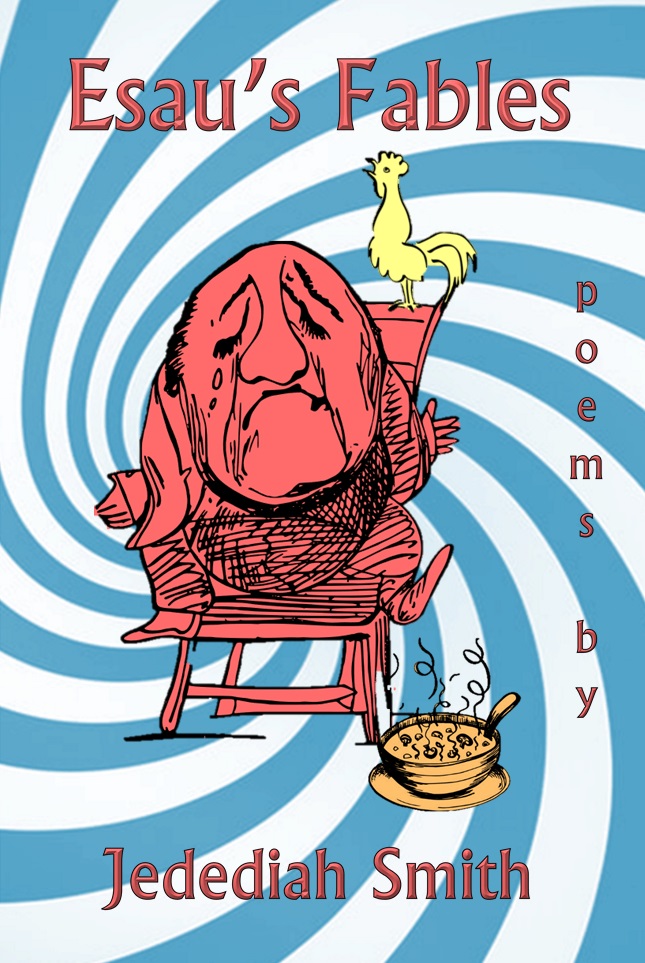
Esau’s Fables: Prose Poems by Jedediah Smith now available as a Kindle Countdown Deal for $0.99, marked down from its original list price of $6.99, from November 8, 2025 to November 15, 2025.
Details: Publisher: Mount Diablo Books Publication date: January 23, 2025 Language: English File size: 2.9 MB Print length: 111 pages
Working in the tradition of Lewis Carroll, Edward Lear, John Lennon, and Jorge Luis Borges, Jedediah Smith uses surrealism and the absurd to travel easily between Homeric battle fields and Universal monster sets, quantum physics and the Fortean paranormal, archetypal mythology and modern pop culture. As the author puts it himself in “Carnival Road,” the a story about an unpaved lane that is in some inexplicable way hallucinogenic, each parable “creates its own logic that is neither symbol nor allegory but an insistence upon a world of its own making, where images connect in ways that cannot be explained, only experienced.”
From Esau’s Fables:
The Last Manson Girl
A news report states that the last Manson girl surrendered to authorities today. She had been married to a police officer. She had become a grandmother to sixteen, a great-grandmother to four. She had hosted a public-access talk show for ferret owners in LA. She smelled like cinnamon and nutmeg. She decrypted the Voynich manuscript which gave her the gift of powwow. She raised organic vegetables in an urban garden and chanted to keep the gophers away. She had been seeking a return to the Edenic among the butchers of living flesh, a paradise under the red and black flag of the ax. She has kept a journal since 1970 which runs backwards toward the Fall. She might save us all.
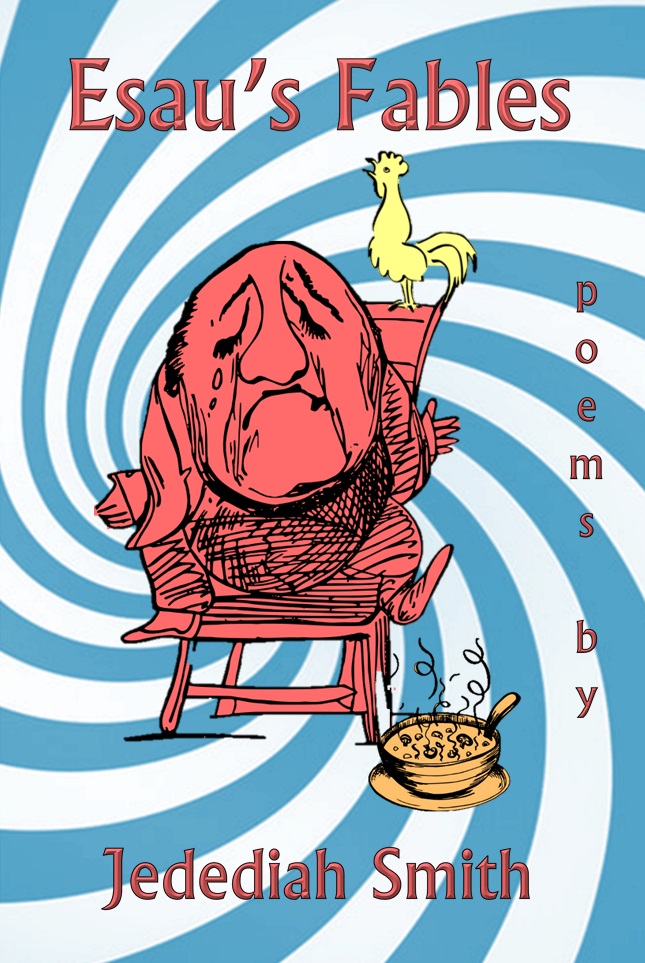
Esau’s Fables: Prose Poems by Jedediah Smith will be available as a Kindle Countdown Deal for $0.99, marked down from its original list price of $6.99, from November 8, 2025 to November 15, 2025.
Details: Publisher: Mount Diablo Books Publication date: January 23, 2025 Language: English File size: 2.9 MB Print length: 111 pages
Working in the tradition of Lewis Carroll, Edward Lear, John Lennon, and Jorge Luis Borges, Jedediah Smith uses surrealism and the absurd to travel easily between Homeric battle fields and Universal monster sets, quantum physics and the Fortean paranormal, archetypal mythology and modern pop culture. As the author puts it himself in “Carnival Road,” the a story about an unpaved lane that is in some inexplicable way hallucinogenic, each parable “creates its own logic that is neither symbol nor allegory but an insistence upon a world of its own making, where images connect in ways that cannot be explained, only experienced.”
From Esau’s Fables:
The Enormous Whisker
Feeling the need of increased stature among his peers, Pepkin decided to grow a beard like those of the great philosophers or Tolstoy or Brahms, and so he stopped shaving. When his beard came in though, it came not as many hairs but one enormous whisker. It grew just above the jawline of his right cheek and resembled a tree trunk. Since it lacked the look of a conventional beard, he thought about shaving it off but decided to give it some time and see how it developed.
As it grew longer, it continued to thicken and soon grew quite heavy. He found himself tilting his head to the right most of the time, as one with classic paralysis of the fourth cranial nerve, and people thought it gave him a contemplative air. In fact he found himself being given considerations he never had before. Friends would listen attentively as he spoke. Strangers would ask him to opine on matters of the day. Clergy sought his advice on matters both theological and lay. Pepkin noticed other men adopting what had come to be called the Pepkin Tilt.
He worried this imitation might dilute his uniqueness, but it was about this time his enormous whisker began to sprout fruit. At first they were just small green nuts clustered at the end of the whisker, but over time they blanched until they looked like pulpy white berries. The weight of the fruit and the still-growing whisker itself caused it to bend down, and the fruit would sway and slap against Pepkin’s chest as he walked. While some men tried to mimic this look as well, with beaded scarves or lengths of pasta, the consensus was that Pepkin had taken his innovation too far. He found himself shunned.
So, he stayed in his apartment more and more, then retreated even farther, rarely leaving his bedroom. Finding the open space of the vast room vertiginous, he constructed a canopy over his bed and brooded inside. After several weeks within this crib, his fleshy berries began to split and ooze a viscous liquid. From within, little baby snakes emerged, each with a face identical to Pepkin’s. When all the snakes had hatched, he took a razor and shaved off his enormous whisker. From its fine-grained substance, he built a boat and sailed it out to sea. The snakes sunned themselves on the deck while Pepkin steered the wheel.
Those who saw them go tried to tell the story of their departure, but few would believe them. So, the storytellers formed their own clubs and societies. They would take turns retelling the tale of Pepkin. They called it “tilting.”
Feeling the need of increased stature among his peers, Pepkin decided to grow a beard like those of the great philosophers or Tolstoy or Brahms, and so he stopped shaving. When his beard came in though, it came not as many hairs but one enormous whisker. It grew just above the jawline of his right cheek and resembled a tree trunk. Since it lacked the look of a conventional beard, he thought about shaving it off but decided to give it some time and see how it developed.
As it grew longer, it continued to thicken and soon grew quite heavy. He found himself tilting his head to the right most of the time, as one with classic paralysis of the fourth cranial nerve, and people thought it gave him a contemplative air. In fact he found himself being given considerations he never had before. Friends would listen attentively as he spoke. Strangers would ask him to opine on matters of the day. Clergy sought his advice on matters both theological and lay. Pepkin noticed other men adopting what had come to be called the Pepkin Tilt.
He worried this imitation might dilute his uniqueness, but it was about this time his enormous whisker began to sprout fruit. At first they were just small green nuts clustered at the end of the whisker, but over time they blanched until they looked like pulpy white berries. The weight of the fruit and the still-growing whisker itself caused it to bend down, and the fruit would sway and slap against Pepkin’s chest as he walked. While some men tried to mimic this look as well, with beaded scarves or lengths of pasta, the consensus was that Pepkin had taken his innovation too far. He found himself shunned.
So, he stayed in his apartment more and more, then retreated even farther, rarely leaving his bedroom. Finding the open space of the vast room vertiginous, he constructed a canopy over his bed and brooded inside. After several weeks within this crib, his fleshy berries began to split and ooze a viscous liquid. From within, little baby snakes emerged, each with a face identical to Pepkin’s. When all the snakes had hatched, he took a razor and shaved off his enormous whisker. From its fine-grained substance, he built a boat and sailed it out to sea. The snakes sunned themselves on the deck while Pepkin steered the wheel.
Those who saw them go tried to tell the story of their departure, but few would believe them. So, the storytellers formed their own clubs and societies. They would take turns retelling the tale of Pepkin. They called it “tilting.”
A selection from Esau’s Fables, published by Mount Diablo Books and available in print and, as of this week, as an e-book from Amazon. The piece also appeared previously in Flash Fiction Magazine.
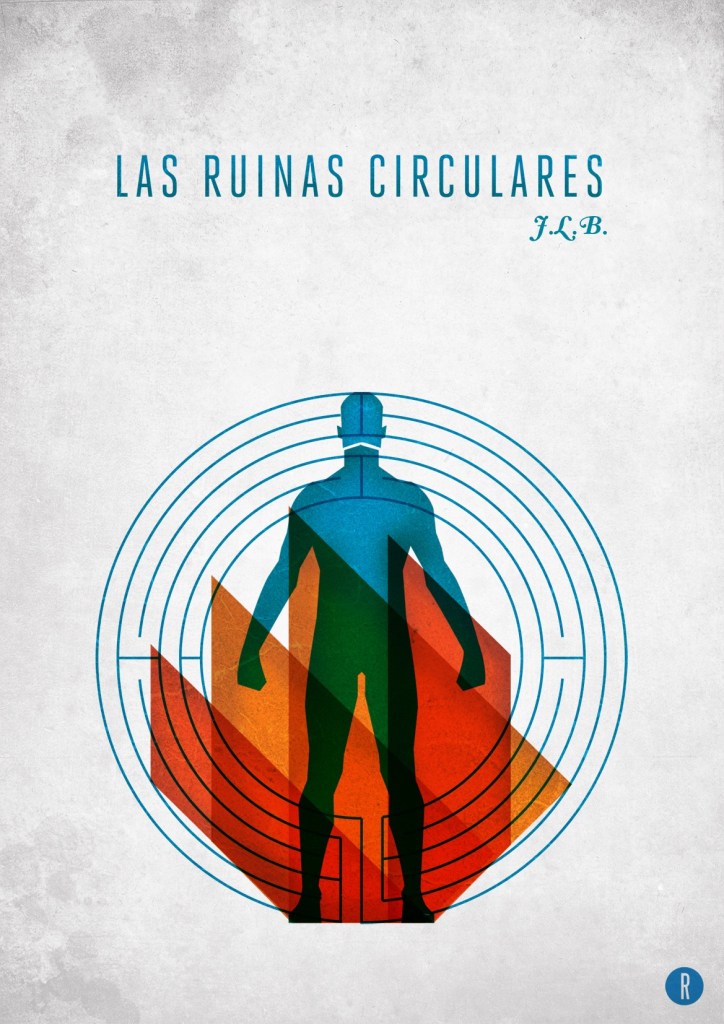
Like Frankenstein, Borges’ story “The Circular Ruins” explores the disturbing consequences of creating life, though here it is through dreaming rather than science. The narrator’s goal is to dream a man with minute integrity and insert him into reality, effectively creating a person out of dreams. Starting his task with perfect integrity, the narrator spends what feels like an infinite amount of time perfecting minute details, such as the hairs on the dream-man’s arm until the task comes to seem Sisyphean. Though the story follows a seemingly simple plot, it leads the reader in circles, reflecting the circularity of the text itself. Borges draws on a Joseph Campbell-like structure, weaving mythological elements and archetypes into the narrative. where reality and illusion blur.
The father-and-son angle serves as a meditation on parenthood, creation, and the responsibilities tied to bringing another into existence. A god of fire, reminiscent of Prometheus, grants the narrator the power to fulfill his purpose of creation but twists the myth into a realization that the creator himself is also a dream. Realizing you’re a dream is one of the story’s most profound moments, leaving the narrator as a trapped figure in endless circularity. As the narrator views his dream-man with both love and detachment, much like a parent might, the narrator reflects on his own decay and the fleeting nature of existence, transforming from the color of fire to that of ashes. Further, Borges’ description of the narrator as a grey man emphasizes his ethereal and enigmatic nature.
Borges integrates folkloric references, such as a Cornish legend, to tie his narrative to timeless myths and universal themes. The phrase “tributaries of sleep” poetically conveys the flow of dreams that feed into the narrator’s creative process. Weaving a rope of sand illustrates the futility and fragility of his task, highlighting the ephemeral nature of dreams. Coining the faceless wind suggests an attempt to shape something intangible and formless, like identity or reality.
As with The Company in “The Lottery of Babylon”, the creator in “The Circular Ruins” seems to possess all-encompassing knowledge, operating with a mysterious, almost divine authority. The ruins in the story evoke a sense of a lost religion that, paradoxically, somehow comes true through the narrator’s act of creation. The narrator’s god is not the God of the Bible but a dream god, aligning with the story’s metaphysical and mythological focus. The dream god reflects the narrator’s belief in a divinity that exists within the realm of imagination and dreams.
The story embodies metafictional and intertextual elements common in the postmodern school, blurring the boundaries between reality, fiction, and self-awareness. Borges’ use of language captures the surreal beauty of a dream, elevating the story’s poetic and philosophical tone. Like Voltaire’s Zadig, the story explores themes of destiny, creation, and the search for meaning within a larger cosmic structure. The ruins suggest a fake Babylon, evoking echoes of Borges’ “The Library of Babel” in their enigmatic, labyrinthine significance. The mention of other burned temples alludes to the cyclical destruction and rebirth that underpin the story’s themes. Borges’ story evokes the adventure and mysticism found in H. Rider Haggard’s tales of exploration and lost civilizations. Like Xenophon’s Anabasis and its tale of 10,000 mercenaries, “The Circular Ruins” portrays an epic journey, albeit one of the mind and spirit rather than physical conquest. The story’s setting feels like an aftermath of disaster, where the ruins represent both destruction and the potential for renewal. The narrator’s solitude reflects yet another abandoned village, a hallmark of Borges’ settings steeped in mystery and decay. The imagery could also evoke the post-apocalyptic aesthetic of the 1979 Walter Hill movie The Warriors with its surprisingly optimistic version of New York where chaos still holds potential for transformation.
In the Gnostic cosmogonies, a red Adam who cannot stand is a flawed creation, paralleling the dreamed man as an imperfect reflection of his creator. Borges evokes the idea that the world was created by the demiurge, a secondary deity whose imperfect work echoes the narrator’s own creation. In this, the story makes connections to ancient tropes and anticipates future ones:
It resonates with themes from Valis by Philip K. Dick, where creation, divinity, and human perception intertwine in a metaphysical exploration. The narrator’s act of creation feels like an addendum to the creation story, presenting a personal, recursive mythology.
Lilith, as a figure of unorthodox creation, serves as a parallel to the dreamed man, an alternative version of humanity’s origins.
The geopolitical urban legend about red mercury echoes the alchemical undertones of the tale, where transformation and secrecy play central roles. Alchemical texts resonate with the story’s themes of creating life from an idea, turning intangible thoughts into tangible forms. The cold fusion of terrorism, like the narrator’s dream, represents a dangerous and explosive act of creation with unforeseen consequences.
The dreamed man parallels a golem, a man made out of clay but without a soul, questioning the essence of humanity. The narrator’s creation recalls Adam of dust from Genesis but is ultimately an Adam of dreams, born from imagination rather than divine breath. The wizard is the dreamer, embodying both the power and the isolation that come with the act of creation.
Borges was the darling of the literary set when he was alive, celebrated for his masterful blend of erudition, philosophy, and imagination, and he is still a god of modern literature The story exemplifies Borges’ hallmark intertextuality, drawing on myths, religious texts, and literary references to deepen its meaning. Paradoxically, Borges’ made-up quotes and citations, a trademark of his style, lend “The Circular Ruins” an air of scholarly parody, blending fiction and reality. Much like H.P. Lovecraft, Borges’ works often parody 19th-century scholarship with their meticulous yet fictional sources.
The story’s themes evoke a clash of blades vs. brambles—sharp intellectual concepts intertwined with the messy, tangled nature of dreams. Borges, like Poe the prankster, injects wit and irony into his work, creating moments of puckish and wry humor amidst serious themes. At the same time, the philosophical undertones of the story recall the works of Herman Melville, blending grand existential questions with intricate, extraordinary sentences. Borges’ writing is puckish and wry, laced with a sense of mischief even as it reaches for profound truths. The narrative of “The Circular Ruins” itself represents an apotheosis, where the narrator ascends to a godlike role as a creator, only to discover he is also a creation.
A young boy kept his neighbor’s foot under his bed. It lay among the dust bunnies, idle, bereft, still wearing its oxblood leather shoe. The boy had not forgotten the foot, but he rarely took it out anymore.
Months before, the boy had stolen it on impulse. He had seen his elderly neighbor napping in a hammock in his backyard. Cleverly, he took the foot without waking the old man.
For a while, the boy thought the foot a marvelous toy. He made it march about his room. It would kick through the boy’s green plastic army men in great mock battles. He dressed it in his mother’s pumps, painted the toes, and practiced his pose. Occasionally, the boy would feed the foot, peeling back the shoe’s tongue and tenderly hand-feeding it oats or kernels of corn.
With time, the games grew crueler. The boy would swell like a lion and ambush the foot or tickle its arch until it cringed in a corner. But soon he became bored and ignored the foot and felt depressed.
The boy turned to his neighbor for help.
I have lost all joy in the things of this world, the boy would say.
The old man could only weep, while hopping on one foot.
Life seems very long, the boy would cry. How my days stretch before me.
After weeks of such talk, the old man spoke. Give me your hand, he said. I’ll teach you to dance.


 Jedediah Smith