From pulp horror to avant garde poetics, writing that hits hard by Jedediah Smith

Tag: absurdism

  • Only 2 More Days! Kindle Countdown Deal on Esau’s Fables

    First: Huge thanks to those who have already purchased the book during this Countdown. I am honored and full of hope that you will enjoy the book.

    Esau’s Fables: Prose Poems by Jedediah Smith now available as a Kindle Countdown Deal for $0.99, marked down from its original list price of $6.99, from November 8, 2025 to November 15, 2025.

    Details:
    Publisher‏: ‎ Mount Diablo Books
    Publication date: ‎ January 23, 2025
    Language: ‎ English
    File size: ‎ 2.9 MB
    Print length: ‎ 111 pages

    Working in the tradition of Lewis Carroll, Edward Lear, John Lennon, and Jorge Luis Borges, Jedediah Smith uses surrealism and the absurd to travel easily between Homeric battle fields and Universal monster sets, quantum physics and the Fortean paranormal, archetypal mythology and modern pop culture. As the author puts it himself in “Carnival Road,” the a story about an unpaved lane that is in some inexplicable way hallucinogenic, each parable “creates its own logic that is neither symbol nor allegory but an insistence upon a world of its own making, where images connect in ways that cannot be explained, only experienced.”

    From Esau’s Fables:

    The Last Manson Girl

    A news report states that the last Manson girl surrendered to authorities today.
    She had been married to a police officer.
    She had become a grandmother to sixteen, a great-grandmother to four.
    She had hosted a public-access talk show for ferret owners in LA.
    She smelled like cinnamon and nutmeg.
    She decrypted the Voynich manuscript which gave her the gift of powwow.
    She raised organic vegetables in an urban garden and chanted to keep the gophers away.
    She had been seeking a return to the Edenic among the butchers of living flesh, a paradise under the red and black flag of the ax.
    She has kept a journal since 1970 which runs backwards toward the Fall.
    She might save us all.

  • 2 more days until Kindle Countdown Deal on Esau’s Fables

    Esau’s Fables: Prose Poems by Jedediah Smith will be available as a Kindle Countdown Deal for $0.99, marked down from its original list price of $6.99, from November 8, 2025 to November 15, 2025.

    Details:
    Publisher‏: ‎ Mount Diablo Books
    Publication date: ‎ January 23, 2025
    Language: ‎ English
    File size: ‎ 2.9 MB
    Print length: ‎ 111 pages

    Working in the tradition of Lewis Carroll, Edward Lear, John Lennon, and Jorge Luis Borges, Jedediah Smith uses surrealism and the absurd to travel easily between Homeric battle fields and Universal monster sets, quantum physics and the Fortean paranormal, archetypal mythology and modern pop culture. As the author puts it himself in “Carnival Road,” the a story about an unpaved lane that is in some inexplicable way hallucinogenic, each parable “creates its own logic that is neither symbol nor allegory but an insistence upon a world of its own making, where images connect in ways that cannot be explained, only experienced.”

    From Esau’s Fables:

    The Enormous Whisker

    Feeling the need of increased stature among his peers, Pepkin decided to grow a beard like those of the great philosophers or Tolstoy or Brahms, and so he stopped shaving. When his beard came in though, it came not as many hairs but one enormous whisker. It grew just above the jawline of his right cheek and resembled a tree trunk. Since it lacked the look of a conventional beard, he thought about shaving it off but decided to give it some time and see how it developed.

    As it grew longer, it continued to thicken and soon grew quite heavy. He found himself tilting his head to the right most of the time, as one with classic paralysis of the fourth cranial nerve, and people thought it gave him a contemplative air. In fact he found himself being given considerations he never had before. Friends would listen attentively as he spoke. Strangers would ask him to opine on matters of the day. Clergy sought his advice on matters both theological and lay. Pepkin noticed other men adopting what had come to be called the Pepkin Tilt.

    He worried this imitation might dilute his uniqueness, but it was about this time his enormous whisker began to sprout fruit. At first they were just small green nuts clustered at the end of the whisker, but over time they blanched until they looked like pulpy white berries. The weight of the fruit and the still-growing whisker itself caused it to bend down, and the fruit would sway and slap against Pepkin’s chest as he walked. While some men tried to mimic this look as well, with beaded scarves or lengths of pasta, the consensus was that Pepkin had taken his innovation too far. He found himself shunned.

    So, he stayed in his apartment more and more, then retreated even farther, rarely leaving his bedroom. Finding the open space of the vast room vertiginous, he constructed a canopy over his bed and brooded inside. After several weeks within this crib, his fleshy berries began to split and ooze a viscous liquid. From within, little baby snakes emerged, each with a face identical to Pepkin’s. When all the snakes had hatched, he took a razor and shaved off his enormous whisker. From its fine-grained substance, he built a boat and sailed it out to sea. The snakes sunned themselves on the deck while Pepkin steered the wheel.

    Those who saw them go tried to tell the story of their departure, but few would believe them. So, the storytellers formed their own clubs and societies. They would take turns retelling the tale of Pepkin. They called it “tilting.”

  • Who Ordered the Cocoa?

    That evening as always, my wife and I were at home reading on the couch.

    According to this, she said, more children disappear every year.

    Looking up from my newspaper, I asked, How can that be when on our block children are running everywhere? I picked six out of the orange tree this morning.

    Getting up, I headed for the kitchen to make a sandwich.

    Could you fix me a drink while you’re up?

    The usual?

    Naturally, she said, and I walked straight through the kitchen, out the door, and into the house next door. I picked up the book I had left in my chair and sat down.

    According to this, I said to my wife who sat in the other chair, the oceans are still rising.

    How can that be, my wife asked, when you just read me a story about how we’re running out of water?

    Getting up, she headed for the kitchen.

    Could you fix me a drink while you’re up?

    The usual?

    Naturally, I said.

    When she handed me my drink, I looked up and asked, did you just hear the paperboy?

    There are no more paperboys, she said, just screaming children.

    I got up and headed out the front door to see. Walking across the lawn, I entered the house next door through the kitchen and took the drink to my wife.

    Sorry to put you to so much trouble.

    No trouble, I said, picking up my newspaper and sitting back on the couch.

    According to this, I said to my wife, they are running out of paper and will stop printing these soon.

    I know, she said. They stopped months ago.

    I realized I was not holding a newspaper but a cup of cocoa. Oh yes, I said, now I remember.

    I headed upstairs to a bedroom. Inside thirty or forty children were jumping around, screaming and fighting with pillows, and I had to shout to be heard, Who ordered the cocoa?

    A selection from Esau’s Fables, available from Amazon in softcover and Kindle.

    “Prose poems. Working in the tradition of Lewis Carroll, Edward Lear, John Lennon, and Jorge Luis Borges, Jedediah Smith uses surrealism and the absurd to travel easily between Homeric battle fields and Universal monster sets, quantum physics and the Fortean paranormal, archetypal mythology and modern pop culture.”

  • Tuesday Citation: They Do Not Always Remember by William S. Burroughs

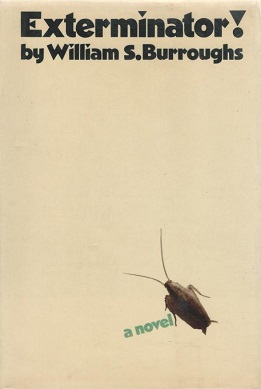
    First published in Esquire, May 1, 1966, this routine (Burrough’s term for his writing jags) was later collected in Exterminator!

    Here is Burroughs talking about the story in relation to his creative process in a lecture at the Naropa Institute (Jack Kerouac School of Disembodied Poetics):

    Now I get about forty percent of my sets an[d] characters from dreams. Sometimes, just a phrase, a voice, a glimpse, and sometimes I will get a whole story or chapter. All I have to do is sit down and transcribe the dream. An example is a story in Exterminator! called “They Do Not Always Remember” And, sometimes in dreams I find a book or a magazine and read a story. So perhaps writers don’t write, perhaps they just read and transcribe.

    Now what are dreams made of? – Much the same material as a novel – pieces of old movies, newspapers, magazines, novels, sensory in-put. The line between subjective and objective experience is purely arbitrary. No objective reality could be experienced without somebody there to experience it subjectively, and no subjective experience could exist without something to experience.

    THEY DO NOT ALWAYS REMEMBER

    It was in Monterrey Mexico … a square a fountain a café. I had stopped
    by the fountain to make an entry in my notebook: “dry fountain empty
    square silver paper in the wind frayed sounds of a distant city.” “What
    have you written there?” I looked up. A man was standing in front of
    me barring the way. He was corpulent but hard-looking with a scarred
    red face and pale grey eyes. He held out his hand as if presenting a
    badge but the hand was empty. In the same movement he took the
    notebook out of my hands. “You have no right to do that. What I write
    in a notebook is my business. Besides I don’t believe you are a police
    officer.” Several yards away I saw a uniformed policeman thumbs
    hooked in his belt. “Let’s see what he was to say about this.”

    We walked over to the policeman. The man who had stopped me spoke
    rapidly in Spanish and handed him the notebook. The policeman leafed
    through it. I was about to renew my prostests but the policeman’s
    manner was calm and reassuring. He handed the notebook back to me
    said something to the other man who went back and stood by the
    fountain.

    “You have time for a coffee señor?” the policeman asked. “I will tell
    you a story. Years ago in this city there were two policemen who were
    friends and shared the same lodgings. One was Rodriguez. He was
    content to be a simple agente as you see me now. The other was Alfaro.
    He was brilliant, ambitious and rose rapidly in the force until he was
    second in command. He introduced new methods … tape recorders …
    speech prints. He even studied telepathy and took a drug once which he
    thought would enable him to detect the criminal mind. He did not
    hesitate to take action where more discreet officials preferred to look the
    other way … the opium fields … the management of public funds …
    bribery in the police force … the behaviour of policemen off duty.
    Señor he put through a rule that any police officer drunk and carrying a
    pistol would have his pistol permit canceled for one flat year and what
    is more he enforced the rule. Needless to say he made enemies. One
    night he received a phone call and left the apartment he still shared with
    Rodriguez … he had never married and preferred to live simply you
    understand … just there by the fountain he was struck by a car … and
    accident? perhaps … for months he lay in a coma between life and
    death … he recovered finally … perhaps it would have been better if he
    had not.” The policeman tapped his forehead “You see the brain was
    damaged … a small pension … he still thinks he is a major of police
    and sometimes the old Alfaro is there. I recall an American tourist,
    cameras slung all over him like great tits protesting waving his passport.
    There he made a mistake. I looked at the passport and did not like what
    I saw. So I took him along to the comisaria where it came to light the
    passport was forged the American tourist was a Dane wanted for
    passing worthless checks in twenty-three countries including Mexico. A
    female impersonator from East St Louis turned out to be an atomic
    scientist wanted by the FBI for selling secrets to the Chinese. Yes
    thanks to Alfaro I have made important arrests. More often I must tell to
    some tourist once again the story of Rodriguez and Alfaro.” He took a
    toothpoick out of his mouth and looked meditatively at the end if ot. “I
    think Rodriguez has his Alfaro and for every Alfaro there is always a
    Rodriguez. They do not always remember.” He tapped his
    forehead. “You will pay for the coffee yes?”

    I put a note down on the table. Rodriguez snatched it up. “This note is
    counterfeit señor. You are under arrest.” “But I got it from American
    Express two hours ago!” “Mentiras! You think we Mexicans are so
    stupid? No doubt you have a suitcase full of this filth in your hotel
    room.”

    Alfaro was standing by the table smiling. He showed a police badge. “I am the FBI señor … the Federal Police of Mexico. Allow me.” He took the note and held it up to the light smiling he handed it back to me. He said something to Rodriguez who walked out and stood by the fountain. I noticed for the first time that he was not carrying a pistol. Alfaro looked after him shaking his head sadly. “You have time for a coffee señor? I will tell you a story.” “That’s enough!” I pulled a card out of my wallet and snapped crisply “I am District Supervisor Lee of the American Narcotics

    Department and I am arresting you and your accomplice Rodriguez for acting in concert to promote the sale of narcotics … caffeine among other drugs …”


    A hand touched my shoulder. I looked up. A greyhaired Irishman was
    standing there with calm authority the face portentous and distant as if I
    were recovering consciousness after a blow on the head. They do not
    always remember. “Go over there by the fountain Bill. I’ll look into
    this.” I could feel his eyes on my back see the sad head shake hear him
    order two coffees in excellent Spanish … dry fountain empty square
    silver paper in the wind frayed sounds of distant city … everything grey
    and fuzzy … my mind isn’t working right … who are you over there
    telling the story of Harry and Bill? … The square clicked back into
    focus. My mind cleared. I walked toward the café with calm authority.

    WSB